
Previous Residents of a Santa Cruz Address
One Santa Cruz County address can have several trails. The deed trail follows ownership. The directory trail follows a named subscriber or household. The census trail adds relationships and ages at released intervals. Newspapers and probate can explain a death, move, sale, or family change. Permits and Sanborn maps can show whether the structure itself changed.
| Source | Years it covers locally | Where held | What it contributes |
|---|---|---|---|
| Recorder official-record index | Online 1978 to present | Recorder web index | Parties, instrument type, date, and locator |
| Recorder images and indexes | Digitized 1850 to present; handwritten pre-1974 indexes | Recorder office, kiosks, Digital Reel, microfilm | Ownership chain and encumbrances |
| Haines criss-cross | Some years 1977 to 2015 | SCPL | Address or phone to listed subscriber |
| Polk directories | Most years 1910 to 1988 | SCPL | Names, trade lines, residences, street sections |
| Earlier regional directories | 1876 to 1890 titles; Santa Cruz 1902 | SCPL microfilm and title collections | Early names, residences, businesses, and places |
| Federal census | Released schedules through 1950 | NARA and genealogy databases | Household relationships, ages, birthplace, and location |
| Newspapers, maps, permits | Historical runs and modern jurisdictional files | SCPL, UCSC, Library of Congress, planning offices | Events, structure changes, and address continuity |
The era table prevents a web cutoff from becoming a false dead end. Older work simply changes hands and formats.
Start With a Santa Cruz County APN
Resolve the modern address before reaching backward. To trace previous residents, use the Assessor Parcel Lookup or GISWeb to copy the APN, situs, legal description clues, and jurisdiction. A street number can change. An APN can be retired after a split or merger. The legal description in a recorded instrument is the stronger bridge to an older deed.
Keep the owner mailing address separate from the situs. A mailing line can be a post-office box, management address, trust address, or a different county. It can help locate a record party, but it does not show every person who was present at the property.
Build one worksheet row for each source year. Include APN, situs, person role, document number, address type, and the exact claim. This keeps past residents from being confused with past owners.
Walk Santa Cruz County Deeds Backward
The chain of title is the sequence of recorded property transfers. Begin with the current assessed owner and find that person or entity as a grantee in the Recorder’s online index. Save the grantor, grantee, recording date, document number, instrument type, and legal description. Then search the seller as an earlier grantee and repeat.
- Use the APN and current parcel record to set the starting point.
- Search the owner’s name in the 1978-to-present official-record index with an approximate date band.
- Compare the deed’s legal description, lot, block, subdivision, or map reference to the same land.
- Follow the grantor backward as a grantee, while labeling deeds of trust, reconveyances, liens, and corrective deeds.
- Move to Digital Reel, microfilm, or handwritten index books when the date crosses the online or 1974 thresholds.
- Grantor
- The party conveying or granting an interest in the instrument.
- Grantee
- The party receiving the interest named in the instrument.
- Chain of title
- The linked sequence of recorded interests used to trace ownership.
- Legal description
- The recorded land definition that can outlast a street-number change.
The Santa Cruz County Recorder guide is the source for the index, counter, map, and copy routes. Recorder staff do not conduct title searches, so arrive with a narrow question.
Before the Santa Cruz County Web Index
Older Santa Cruz County previous residents do not disappear at the Santa Cruz County online boundary. The Recorder says records have been digitized from 1850 to the present. Images from 1850 through 1996 are available on Digital Reel and microfilm. Documents before 1974 use handwritten indexes at the office. Counter viewing is free, and copy requests need a document number, year, party name, and document type.
Filed maps require title, filing date, map book, and page. They are not currently orderable online in the same way as an index result. Kiosks at 701 Ocean Street, Room 230, and the South County office at 500 Westridge Drive give a richer route for older land work. Map copies use a separate fee schedule.
Party-name abbreviations also change by period. A modern full spelling can miss an older institutional grantor. Try the form used in the relevant volume, compare the legal description, and preserve both variants in the research note.
Haines Reverses Santa Cruz County Addresses
Haines criss-cross volumes are valuable when the address is known but the person is not. Some Santa Cruz County years between 1977 and 2015 are arranged by address and telephone number. They can place a listed subscriber at a number during one publication year, then show a change in the next available volume.
Read the line as a subscriber clue. It may omit family members, use a business or shared phone, or reflect a publication gap. Compare it to the owner chain, a permit date, census schedule, or a newspaper notice. A person listed in a Haines volume is not automatically the owner. The Directory Book keeps the collection and publisher details together for previous residents research.
The house-history guide is also useful for older place work because it points toward directories, maps, photographs, newspapers, and permits that can be paired around one address.
Polk and Census Household Years
Polk’s Santa Cruz County directories cover most years from 1910 through 1988. Earlier regional titles reach back to 1876, with a Santa Cruz city title for 1902. Use the alphabetical section for a known name and the street section when available. Then compare the entry to a released census schedule to add relationships and ages that a directory may omit. This is often the clearest bridge to previous residents between deed dates.
- Copy the first known directory line, including name form, spouse, address, and trade notation.
- Check the closest 1900, 1910, 1920, 1930, 1940, or 1950 census schedule.
- Move through the available directory years and mark first appearance, moves, and gaps.
- Search the SCPL newspaper index for obituary, wedding, school, club, sale, or probate context.
- Validate ownership in deeds instead of treating a directory householder as title holder.
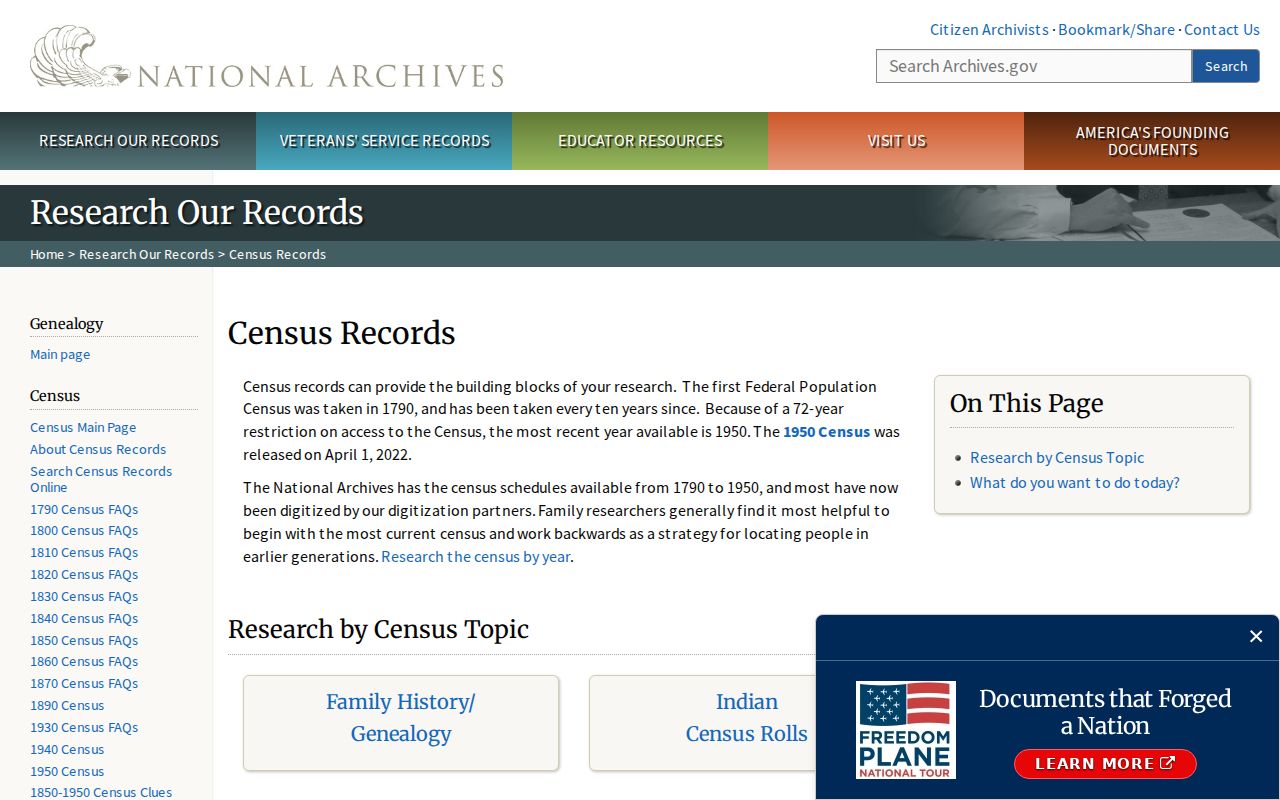
The National Archives census route explains the public schedule access. The 72-year rule makes 1950 the latest public schedule as of 2026. A census street number can be approximate, so compare names and neighbors as well as the address.
The census image in the manifest comes from that federal research route. It represents a household snapshot, not a complete chain for every year.
When a household is absent, consider rural coverage, boarders, women recorded through a spouse, missing schedules, and changed locality names before concluding that the family was not there.
Maps and Permits Date Santa Cruz Houses
Sanborn and historic maps can show a building footprint, use, street name, and number in a historical edition. UCSC Special Collections, UCSC Digital Collections, and the Library of Congress are the research routes named for Santa Cruz County sheets. A map can show when a structure or lot form changed, but it is not a title record or people list.
Modern city and county permits add work dates, descriptions, applicants, contractors, status, and inspection milestones where public. Choose the city or County Planning office only after resolving the parcel jurisdiction. A rebuild, second unit, demolition, or fire repair can explain why a directory entry appears to stop.
Use maps and permits as time markers between deeds and household sources. A property may keep its land identity while the building, number, or use changes.
Newspapers Probate and Death Events
Newspapers and probate files close many previous-resident trails. SCPL’s Historical Newspaper Index chiefly covers 1856 through 1960 and supports names, dates, and keywords. Obituaries, weddings, sales, construction notes, clubs, and business notices can explain a move or a missing directory line. The cited article still needs image verification.
A probate case may identify a decedent, petitioner, heirs, and property references. A death certificate confirms the event under copy rules. Neither one proves that the person lived at the searched address on the date of death. Compare the address type, date, and relationship in the source.
The trail often ends with a modest statement: a person was listed at the address, owned the parcel, died in the county, or was named in an estate. The source role matters more than a broad label.
Santa Cruz Address Continuity Traps
Santa Cruz County has no single countywide street-renumbering year identified in the research. Treat an old number as a question. Compare APN, legal description, lot and block, map book and page, adjacent names, historic maps, directories, permits, and period postal labels.
Postal geography can also break a false chain. A Santa Cruz mailing address may lie outside the City of Santa Cruz. Watsonville reaches far into the Pajaro Valley. A 95033 Los Gatos mailing identity can land on the Santa Cruz side of the mountain line. Use GIS to select the correct planning or permit custodian.
When an address changes, keep both forms in the worksheet. Search the person, street, and neighboring names under each plausible locality. An old newspaper may use East Santa Cruz, Live Oak, Pleasure Point, Aptos, Rio del Mar, or Seacliff in ways that overlap ordinary speech.
Verify Santa Cruz County Previous Residents
Previous residents should be written as a dated evidence sequence, not a single name pulled from a current owner card. Separate the claim, source, and limit for every row. Keep ownership, directory listing, census household, permit applicant, newspaper mention, probate party, and current mailing line distinct.
- Anchor the property with the current APN, situs, and legal description.
- Walk the Recorder chain backward, using counter and microfilm channels when needed.
- Insert Haines, Polk, regional directories, census schedules, newspapers, and maps by year.
- Use probate or obituary material to explain a disappearance or transfer.
- Preserve uncertainty where a source is selective, a year is missing, or the address changed.
Lawful house history. Research into past residents in Santa Cruz County is appropriate for family history, preservation, genealogy, and personal curiosity. Do not use old records to stalk, harass, threaten, or repeatedly contact a living person.
The best house history can say when a parcel changed hands, when a named person was listed, and which records bridge the gap. It should not turn a historical clue into a claim about someone’s present life.