
Santa Cruz County Block Lookup
A Santa Cruz County neighbors search needs a coverage map because no official countywide neighbor roster was located. Each source answers a separate block question. GIS shows spatial adjacency. The Assessor can show an assessed owner and parcel facts. The Recorder traces each parcel’s instruments. Elections may supply a controlled street product. Historical directories show a listed subscriber in a particular year. Community groups may publish a public officer or contact, not a member list.
| Source | What it shows about a block | Access |
|---|---|---|
| GIS map browse | Adjacent parcels, APNs, selected layers, and road or right-of-way context | Free public viewer; no people roster |
| Assessor parcel details | Situs, assessed owner or mailing line, values, characteristics, exemptions | Public APN or address route |
| Recorder documents | Ownership chain for each separately identified parcel | Index, counter, mail, or paid copy |
| Street-sorted voter product | Registered names and address fields in an approved geography | Qualifying purpose, ID, application, fee |
| Permit or code record | Work, case facts, dates, applicants, contractors, inspections | City/county jurisdiction route |
| Historical reverse directory | Listed subscriber or business at a number in one publication year | Library, archive, or microfilm |
| Public civic contact | Organization officer, board contact, or meeting information | Organization or official page |
The block table is deliberately narrower than a people search. It records what the parcel and source can support, then leaves private household information alone. A whole named-street chain belongs in the Santa Cruz County street directory.
Click Santa Cruz County Parcels in GISWeb
Open Santa Cruz County GISWeb and search the target address or APN. Zoom until parcel outlines are distinct. Select the target with Identify. Copy its APN, then click each touching or facing polygon one at a time. A road or right-of-way can separate a nearby parcel. One large parcel can span several apparent addresses. Nearby does not always mean adjoining.
The process is simple but should be recorded:
Address → target APN → touching or facing APNs → Assessor facts → Recorder document trail → optional historical or civic source.
GIS layers can show jurisdiction, planning, environmental, and reference context. The current layer list and pop-up fields are dynamic. Do not claim that the map itself displays an owner unless the live parcel result proves it. Use the APN to cross into the assessment record.
The Santa Cruz County GISWeb is the geographic starting point for neighbors, while the Assessor Parcel Lookup is the record step for each selected APN.
Assessor Facts for Santa Cruz County APNs
After mapping a Santa Cruz County block, inspect each APN separately. The Assessor result may connect the parcel to a situs, an assessed owner or mailing line, land and improvement values, property characteristics, and exemption indicators where legally displayable. The mailing line can differ from the physical address. That difference may help locate a record party, but it does not identify all people at the parcel.
A homeowners’ exemption is evidence consistent with principal-residence use, not a complete household statement. A condominium or multi-unit parcel can contain several households. A trust, business, or manager can appear in the owner field. Preserve the exact field label in the block matrix.
| Parcel field | What a neighbor study should say |
|---|---|
| APN | The parcel key used to keep adjacent records apart. |
| Situs | The physical place tied to the selected parcel. |
| Owner or assessment name | The name shown in the public roll where display is permitted. |
| Mailing address | The notice destination, which may be elsewhere. |
| Property facts | Values, traits, exemptions, and map links subject to current portal limits. |
Santa Cruz County Recorder Block Transfers
Map adjacency does not create one shared ownership history. Each APN gets its own Recorder search. Begin with the assessed owner or known party, locate the acquisition instrument, and compare its legal description to the parcel. Then follow the grantor backward if a historical block study needs past owners.
The online official-record index covers 1978 to the present. Digitized records reach 1850, images from 1850 through 1996 are available on Digital Reel and microfilm, and pre-1974 name indexes are handwritten at the office. Older party abbreviations can hide a modern spelling match. Record instrument type because a deed of trust, reconveyance, lien, or corrective deed is not the same as a transfer.
The Recorder’s official search guide explains the index and counter route. Public viewing is free, while copy and certification fees apply. A block matrix should list document number and date rather than a vague “last sale.”
Street-Sorted Voter Rules
Santa Cruz County Elections identifies the voter file as confidential. A street-sorted product is available only for a qualifying election, scholarly, journalistic, political, or governmental purpose under Elections Code sections 2188 and 2194. The application requires purpose, identification, addresses, requested geography and fields, certification, signature, and photo ID.
Walking lists and printed voter indexes can be sorted by street or alphabetically. The county publishes product prices, including $0.50 per 1,000 names for walking lists and tiered prices for printed or CD products. Payment is in advance. Participation history can show whether a person voted in up to four elections, never how anyone voted.
My Voter Status is a personal self-check, not a way to browse Santa Cruz neighbors. A general public-record request does not override the Elections Code. If the study has a lawful qualifying purpose, use the current county application and ask Elections about the accepted channel.
Historical Santa Cruz County Neighbors
For a past block, Haines criss-cross volumes can reverse an address to a listed subscriber in some years from 1977 through 2015. Polk directories cover most years from 1910 through 1988 and often include street sections. Read consecutive numbers in the same issue, then compare the names with deeds, census schedules, and newspapers.
A directory listing is selective and date-bound. It can show a subscriber, householder, business, or resident line while omitting other people. The absence of a number or name may mean a missing year, publication choice, road change, or spelling variant. Keep the publication title and year beside every entry.
SCPL’s local-history collection, UCSC materials, MAH archives, and Pajaro Valley repositories add photographs, maps, school material, obituaries, and community records. They provide historical context, not an open current member roster.
Santa Cruz County Civic Contacts
Neighborhood groups, HOAs, watch groups, congregations, clubs, and schools may know a block’s history, but public contact does not equal membership. The research located no authoritative countywide association directory. Use official city pages, a group’s own public board contact, library local history, or an archive rather than substituting an unofficial roster.
| Community route | Useful public signal | Boundary to keep |
|---|---|---|
| City neighborhood or advisory page | Meeting notices, officers, public contact, civic issue | Does not list every household |
| HOA or watch group | Public board contact or safety notice when intentionally published | Membership and private rosters stay with the group |
| Library or archive | Neighborhood history, photographs, newspapers, and local collections | Historical evidence is not a current roll |
| Chamber or civic directory | Organization or business contact and officer name | Professional or civic link is not a home address |
Santa Cruz County communities such as Santa Cruz, Live Oak, Aptos, Davenport, Bonny Doon, the San Lorenzo Valley, Scotts Valley, Capitola, and Watsonville can have different civic sources. Choose the community layer after GIS confirms the jurisdiction and locality.
Fraud Alerts Around Santa Cruz Parcels
Santa Cruz County Fraud Notify is a useful parcel-adjacent monitoring tool. The free service emails a subscriber when a name match appears in a newly recorded document. The October 2025 launch makes it a local records initiative, but an alert is not a fraud finding. Common names can create false alerts, and the index or document must be checked.
The Recorder Fraud Notify page capture shows the signup and alert route.
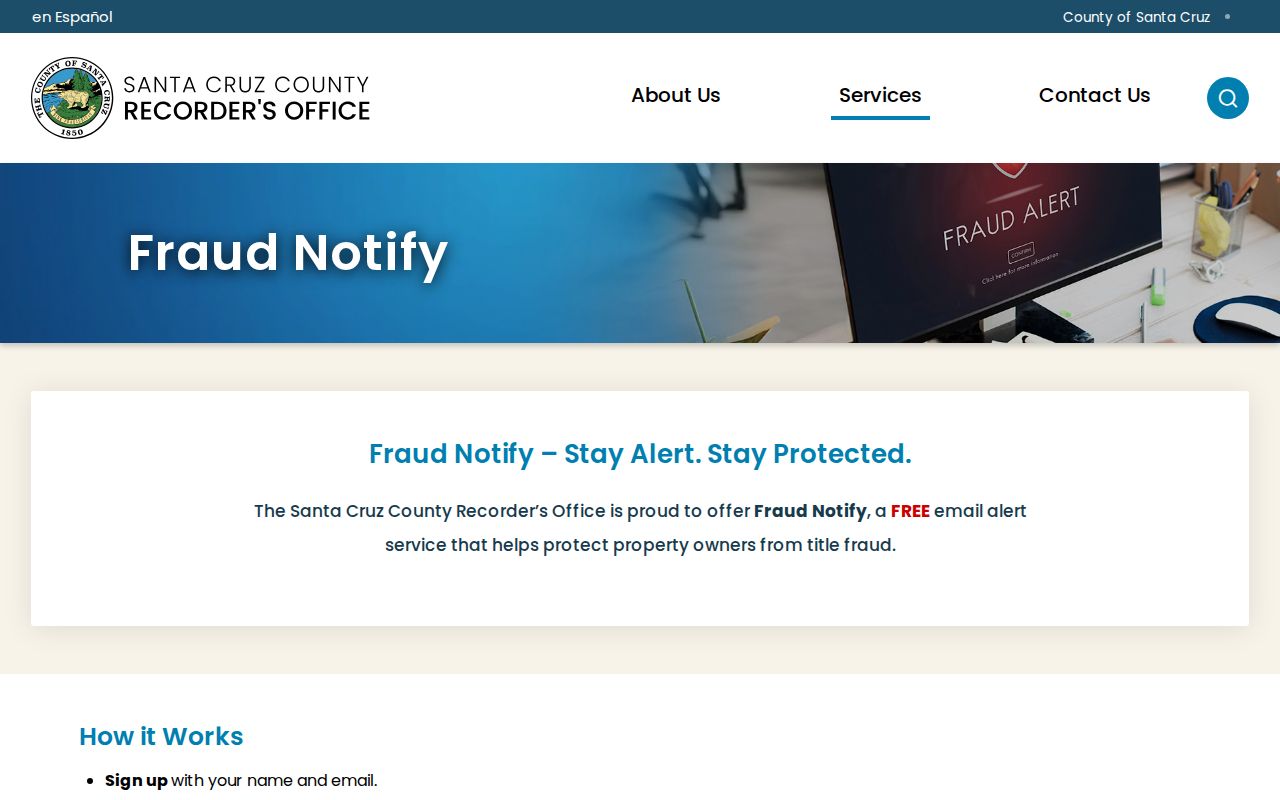
Alerts identify a document number, type, grantor, grantee, and index link. Full documents are available through Recorder kiosks or purchased copies. Add the alert to the parcel matrix only after the name, APN, and instrument are verified.
Public Safety Records Need Context
A Santa Cruz County block study may encounter custody, incident, or address-confidentiality sources. Sheriff Corrections can point to local custody information, but custody changes fast. Sheriff report access is restricted by victim, investigative, juvenile, medical, and safety rules. A report request by address alone does not guarantee release.
The Santa Cruz County Sheriff capture shows the corrections route, while the report-request page explains limits.
Use a court docket for charges and disposition, not a booking line. Do not confront anyone based on a record. For an eligible Safe at Home participant, the substitute mailing address is not evidence of the confidential residence.
The Sheriff report-request capture shows the separate route for releasable incident records.
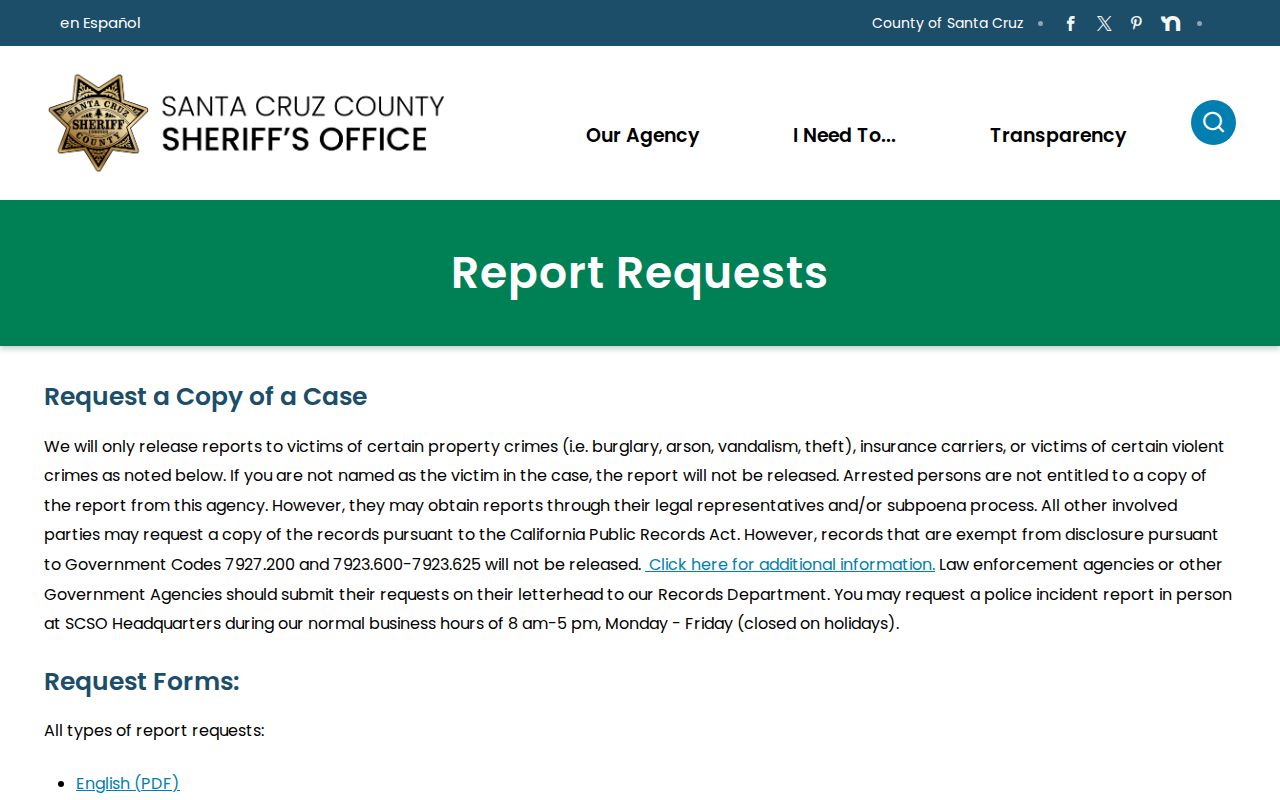
Victim, witness, juvenile, medical, investigative, and safety details can be withheld even when an address or incident number is known.
The Safe at Home program image shows the confidentiality route.
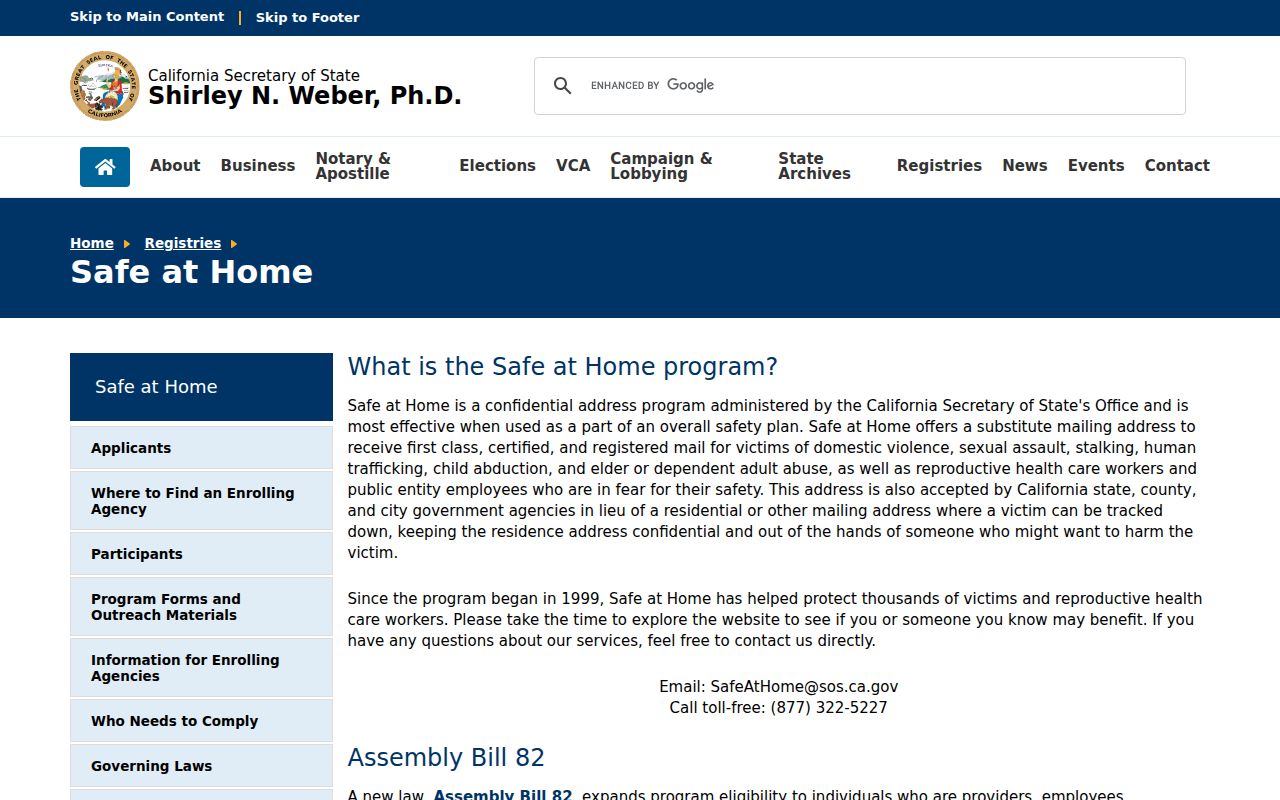
Public safety and privacy records belong in a block study only when the lawful purpose is clear and the source’s limits remain visible.
Santa Cruz Block Matrix
The strongest Santa Cruz County neighbor study uses one row per APN. Add situs, assessed owner, mailing-city difference, last recorded transfer, permit clue, historical directory year, and access date. This format stops a map shape, owner name, or old subscriber line from becoming a claim about everyone near the target.
Official records and commercial compilations have different roles. A custodian record has a defined source and access rule. A commercial result may be stale or merged. Use any compilation only as a lead, then verify through the Assessor, Recorder, court, library, or other originating office.
| Evidence route | Useful block claim | What it cannot prove |
|---|---|---|
| GIS and APN | These parcels are spatially adjacent or face the same road | Who lives in each parcel |
| Assessor | This name appears in the assessed ownership or mailing field | Every household member or current presence |
| Recorder | This party signed or received the recorded instrument | Continuous residence |
| Directory or voter product | A listed person or approved voter field appears for a date or geography | A complete current neighbor roster |
The California DROP capture is a reminder that broker deletion and government-record correction are separate tasks.
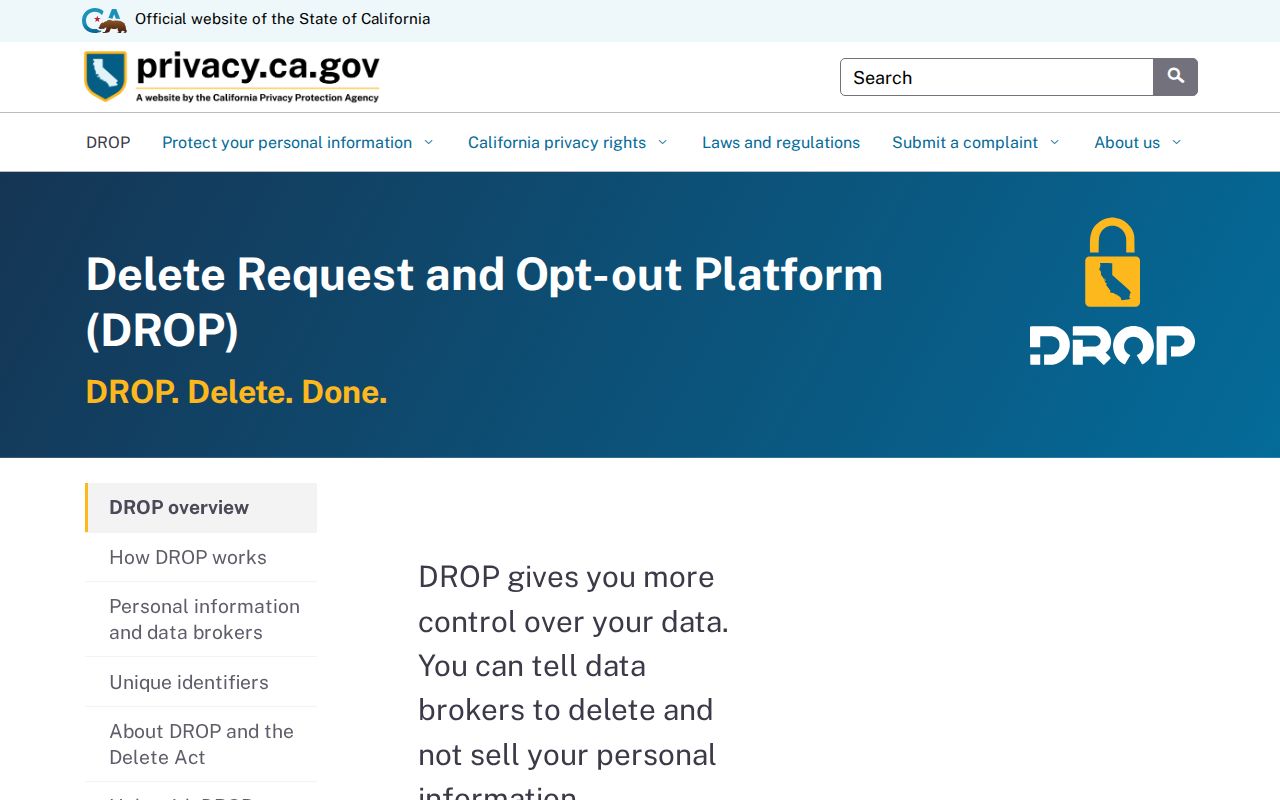
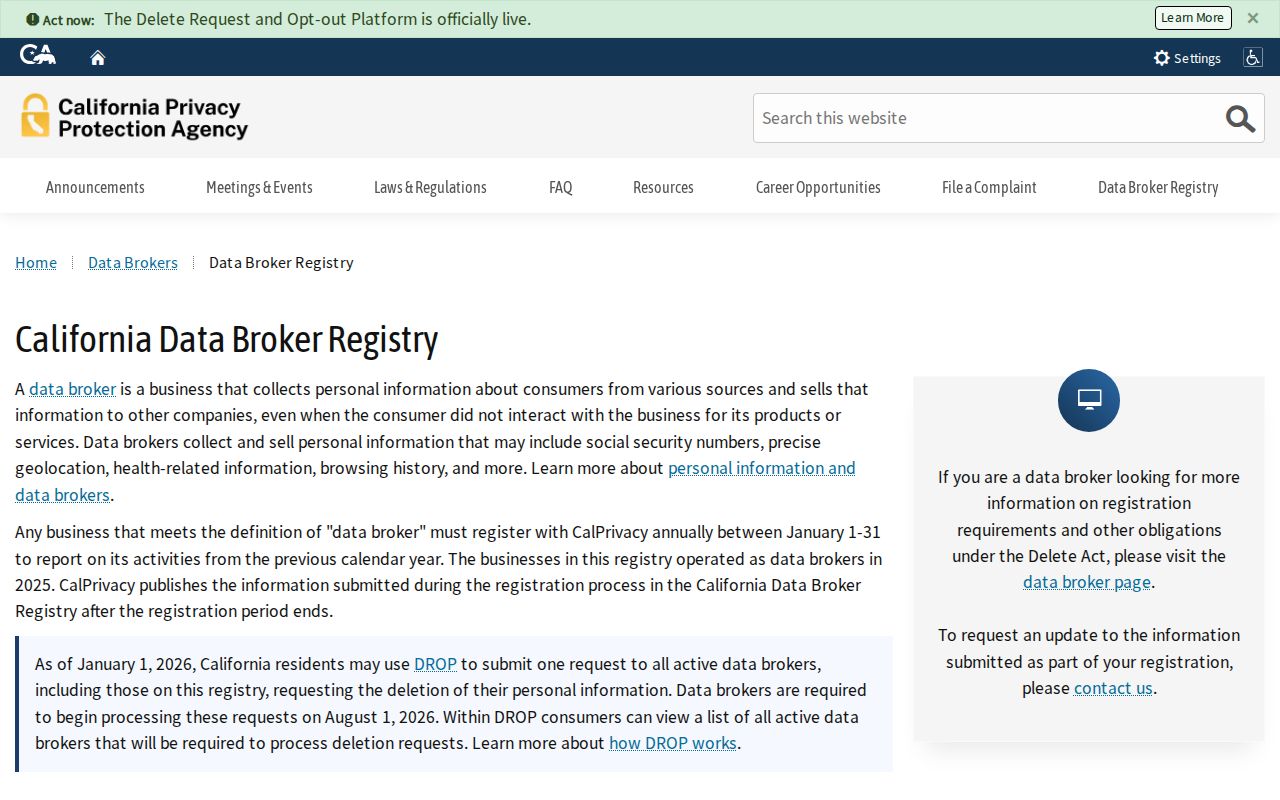
Use the state data-broker registry when a copied profile needs a privacy request. Do not expect it to remove a deed, court file, parcel card, or voter record held under another law.
The California data-broker registry capture below supports that distinction.
Privacy Limits for Santa Cruz County Neighbors
Looking up Santa Cruz neighbors cannot reveal every person on a block. Non-owner household members, children, utility customers, DMV addresses, protected voters, sealed parties, and Safe at Home participants may not appear in open records. A commercial profile can add errors rather than fill a lawful gap.
Minimize the data you copy. Keep the APN, source, role, date, and narrow claim. If an address is protected or a record is withheld, use the custodian’s correction, redaction, or confidentiality route. Do not publish an older protected address simply because it was once visible.
Lawful personal use. Santa Cruz County neighbors research can support civic work, family history, parcel questions, and personal safety. Do not use a block search to stalk, harass, intimidate, or repeatedly contact anyone.
A defensible answer can identify adjacent parcels, assessed ownership fields, recorded transfers, public civic contacts, or dated directory entries. It should leave private household conclusions unstated.