
Santa Cruz Directory Shelves
The Santa Cruz County city directory shelf is regional as well as municipal. A title that says “Santa Cruz” may cover the city, the county, or a wider coast and bay area. The coverage table keeps those scopes visible and shows why a single catalog phrase can miss a person.
| Collection | Years or publisher | Where held | Access and value |
|---|---|---|---|
| Polk’s Santa Cruz Directory | Most years 1910 to 1988, R. L. Polk & Co. | SCPL Downtown and local history | Print or microfilm; alphabetical and many street sections |
| Haines Criss Cross | Some years 1977 to 2015, Haines & Co. | Santa Cruz Public Libraries | Address and telephone order; reverse place search |
| Santa Cruz City Directories | 1921 to 1968 print | MAH archives and SCPL overlap | Archive research policies apply |
| Santa Cruz City Directory | 1902, Press of K. E. Trish | SCPL microfilm or title listing | “General Directory of the Citizens” |
| McKenney district and coast titles | 1879; 1884 to 1885 | SCPL microfilm and title collection | Regional names, trades, residences, and town sketches |
| Earlier business directories | 1876 to 1890 titles | SCPL and local collections | Business and place context, not a full household roll |
Polk gives the strongest long run for twentieth-century name work. Haines reverses the route from an address. The early regional volumes matter when a Santa Cruz County resident appears outside a city-only title. Publication gaps are part of the evidence and should not be read as a move.
Polk's Santa Cruz Years
Most Polk Santa Cruz city directory volumes at SCPL fall between 1910 and 1988. The alphabetical half can identify a surname, given name or initial, spouse notation, trade line, and residence. In many runs, a street or address section lets the search turn back toward a place. Copy the page’s abbreviations and the volume year before moving to the next issue.
The library’s local-history resources route brings directories together with yearbooks, cemeteries, civic collections, clipping files, and historic-house material.
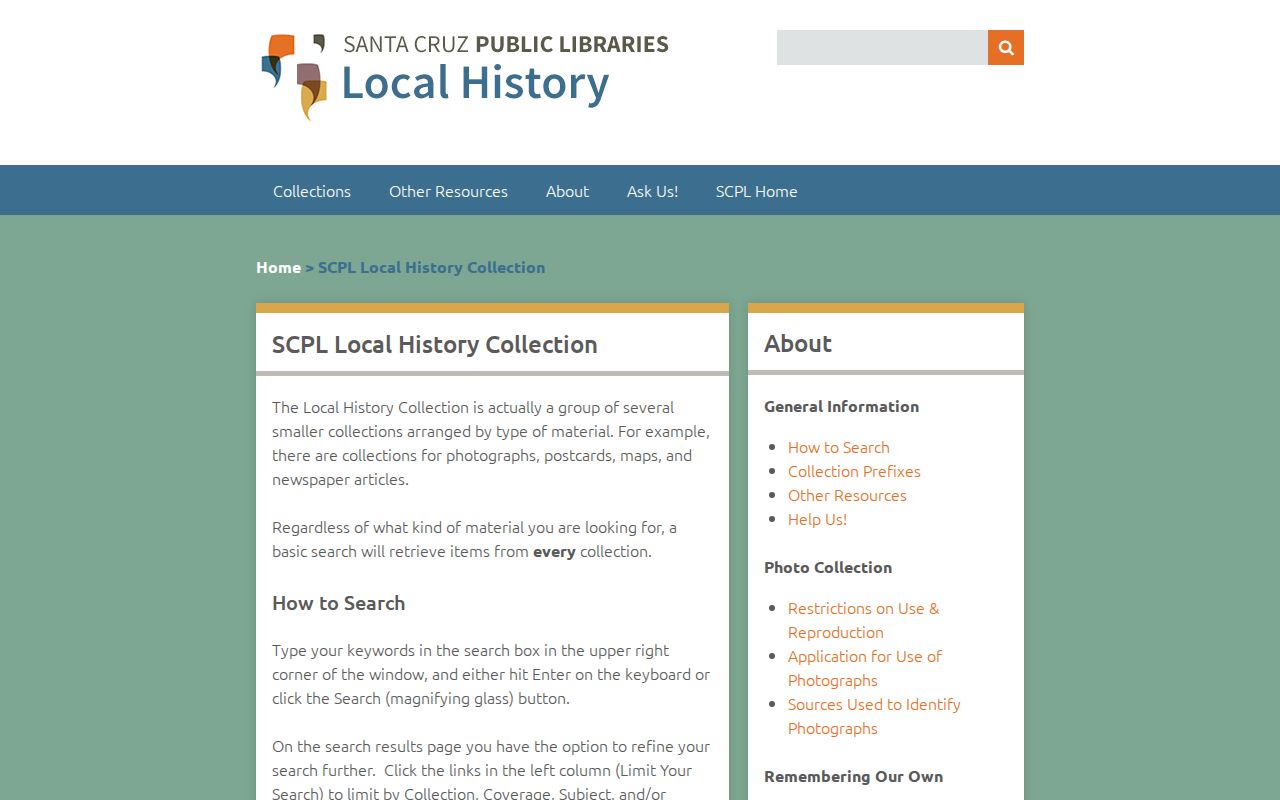
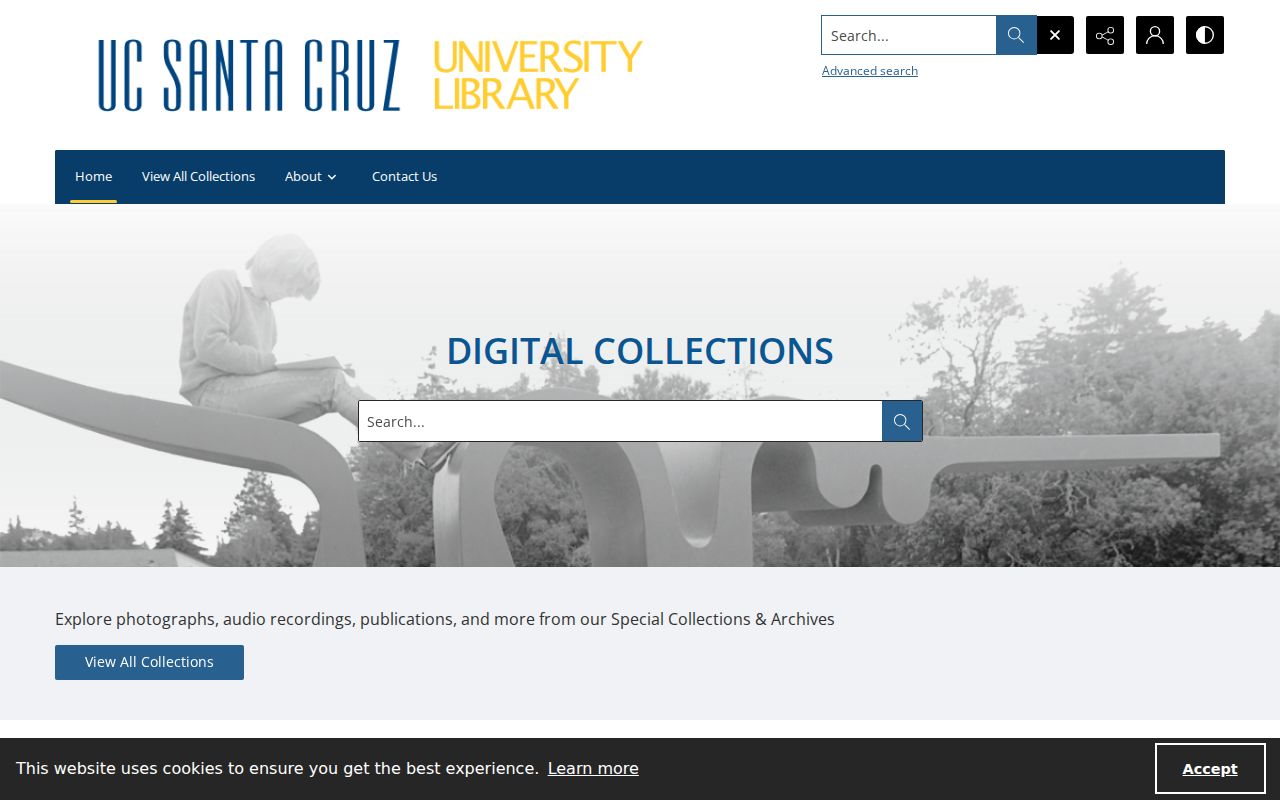
The digital collection is a companion, not a replacement for every bound directory. The image shows the broader local-history search environment where photographs, maps, postcards, and newspaper material can add context to a directory entry.
A person absent from one Polk year may have moved, changed a name, died, been omitted, or fallen into a missing publication year. A second directory, newspaper index, census, or probate record is needed before choosing among those explanations.
Haines Criss-Cross Years
Haines criss-cross volumes from some years between 1977 and 2015 are the address-first tool in the Santa Cruz city directory collection. The route is street, number, listed subscriber, and telephone context. It helps when a house is known but the person’s name is not, and it can test whether a name found in an alphabetical volume was tied to the expected place.
A subscriber is not always the only person at an address. Treat the entry as a time-stamped listing. Compare the line with the Assessor’s situs and mailing fields, a permit date, and a deed or newspaper item. For current address work, the Santa Cruz County street directory keeps the modern parcel chain separate from these historical collections.
Some Haines years may be missing from the local run. Ask the library staff for the exact volume, edition, or neighboring year instead of assuming the collection is continuous.
Early Santa Cruz Regional Titles
Early Santa Cruz County city directory research often fails because the searcher looks only for a city title. McKenney’s District Directory for 1879 covered several counties and was described as including residents plus city and town sketches. The Coast County Directory covered 1884 to 1885. Regional San Jose titles included Santa Cruz County in 1884 to 1885, 1887 to 1888, and 1889.
Business layers add still earlier context. The Pacific Coast Business Directory covers 1876 to 1878, while the California State Gazetteer and Business Directory has 1888 and 1890 entries. These books may show a trade, firm, or town link without naming every person in a household. Use the scope line and publisher before comparing a result to a modern address.
Santa Cruz County’s brief Branciforte name at organization in 1850 is another catalog term. Older newspapers, land records, church material, and archive descriptions may use Santa Cruz, Branciforte, or a period place label for the same family trail.
Reading Santa Cruz Directory Entries
A city directory entry is compressed evidence. It may use a surname first, a given initial, a spouse in parentheses, a short trade line, and a residence mark. Later address sections reverse the order. Decode the volume’s own front matter before treating a mark as a fact.
| Entry feature | What it may mean |
|---|---|
| Name | Surname, given name or initial; more than one family member may have a separate entry. |
| Spouse | A name in parentheses or a related line that helps distinguish same-name people. |
| Trade or work line | A compressed occupation or business clue, sometimes with a work address. |
| Residence mark | “r” or “res” can mark a residence; “h” can identify a home or householder. |
| Widow notation | “wid” followed by a given name can provide a family transition clue. |
| Boarder or roomer | “bds” or “rms” can indicate lodging rather than ownership. |
- Criss-cross section
- The street-order portion of a later volume, often arranged by address or phone.
- Householder index
- A name or address finding aid centered on the person treated as the main resident in that volume.
- Abbreviation key
- The publisher’s guide to short marks; consult it before expanding an entry.
The entry shows how the publisher described a person at that time. It does not by itself establish title, every household member, or a present address.
Newspapers Explain Directory Gaps
The SCPL Historical Newspaper Index is a strong companion to the city directory shelf. Its main run is chiefly 1856 through 1960 and points to names, dates, and keywords in local papers. The cited article is generally read on Downtown Branch microfilm or through library newspaper access. Bound Genealogy Room indexes may be more complete than the online index.
The Historical Newspaper Index capture shows the name, date, and keyword search route.
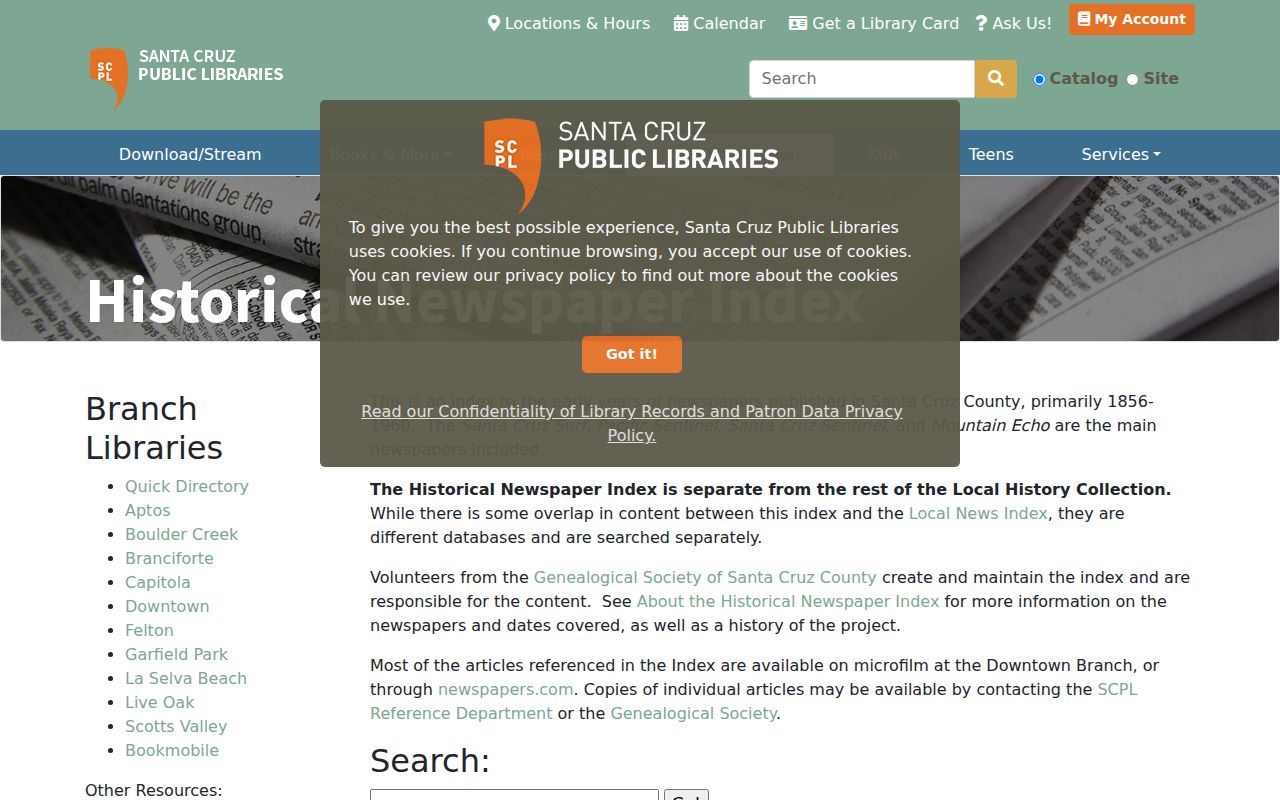
Search an inverted exact name, then repeat with spelling variants and a place or event term. From 1942 through 1947, the Sentinel had morning and evening editions, but the index does not identify which edition was used. Verify the article image before quoting it.
The index began in 1982 with a Friends of the Library grant and moved to the Genealogical Society of Santa Cruz County in 2007, with volunteers continuing the work. More than 50,000 local-interest clippings are separately indexed by SCPL, so the two databases should not be treated as one.
Pair Santa Cruz Directories With Census
Federal census schedules fill in what a Santa Cruz city directory compresses. The released schedules through 1950 can show household relationships, ages, birthplaces, trade or occupation, and location. The 72-year rule makes 1950 the latest public population schedule as of 2026, while 1960 is due in 2032.
- Copy a person’s first directory entry, including initial, spouse, address, and trade line.
- Check the nearest released census year for household relationships and age clues.
- Return to the next directory year and note moves, additions, omissions, or changed marks.
- Use a street section or Haines volume to test the address when the surname disappears.
- Close the question with a newspaper, probate, deed, cemetery, or vital-record source.
The National Archives census research route explains the public schedule context. A census address may be approximate, and a directory omission may reflect a gap rather than a move.
For early Santa Cruz research, remember the 1890 national census break. Directories, voter registers, tax rolls, newspapers, church records, and probate files often bridge the missing decade.
Where Santa Cruz Collections Live
SCPL is the broadest first stop, but the county’s city directory story is not held in one room. The Museum of Art & History archives include overlapping Santa Cruz city runs, telephone books, local business material, and community history. UCSC Special Collections adds regional manuscripts, maps, photographs, oral histories, and institutional records. Watsonville Public Library and Pajaro Valley repositories are essential for south-county families and the Register-Pajaronian.
The UCSC Special Collections capture shows the archive route beyond a printed directory shelf.
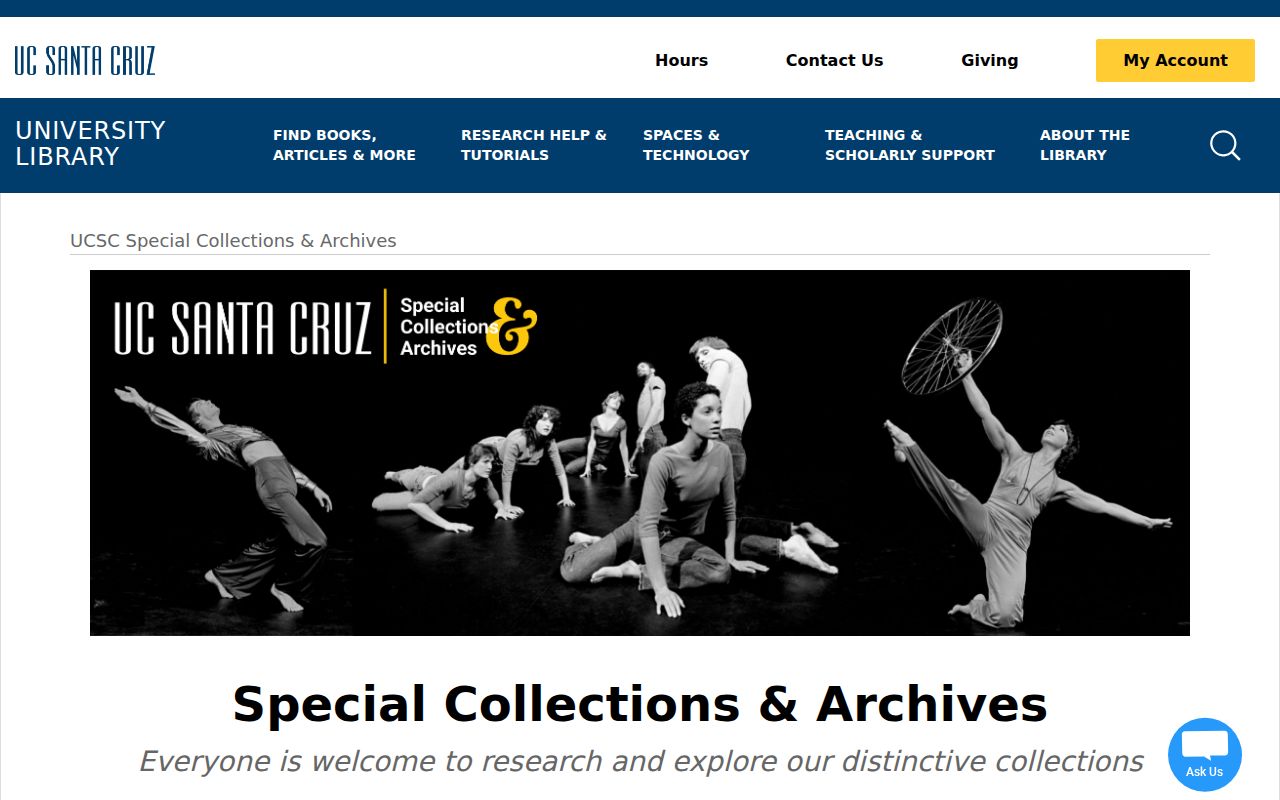
Some originals require staff help or an onsite visit. Ask for a collection title, date range, and locality. A catalog record is evidence that a collection exists, not proof that a digitized page is open online.
The California State Archives collections route can fill custody gaps alongside the Museum of Art & History archives.
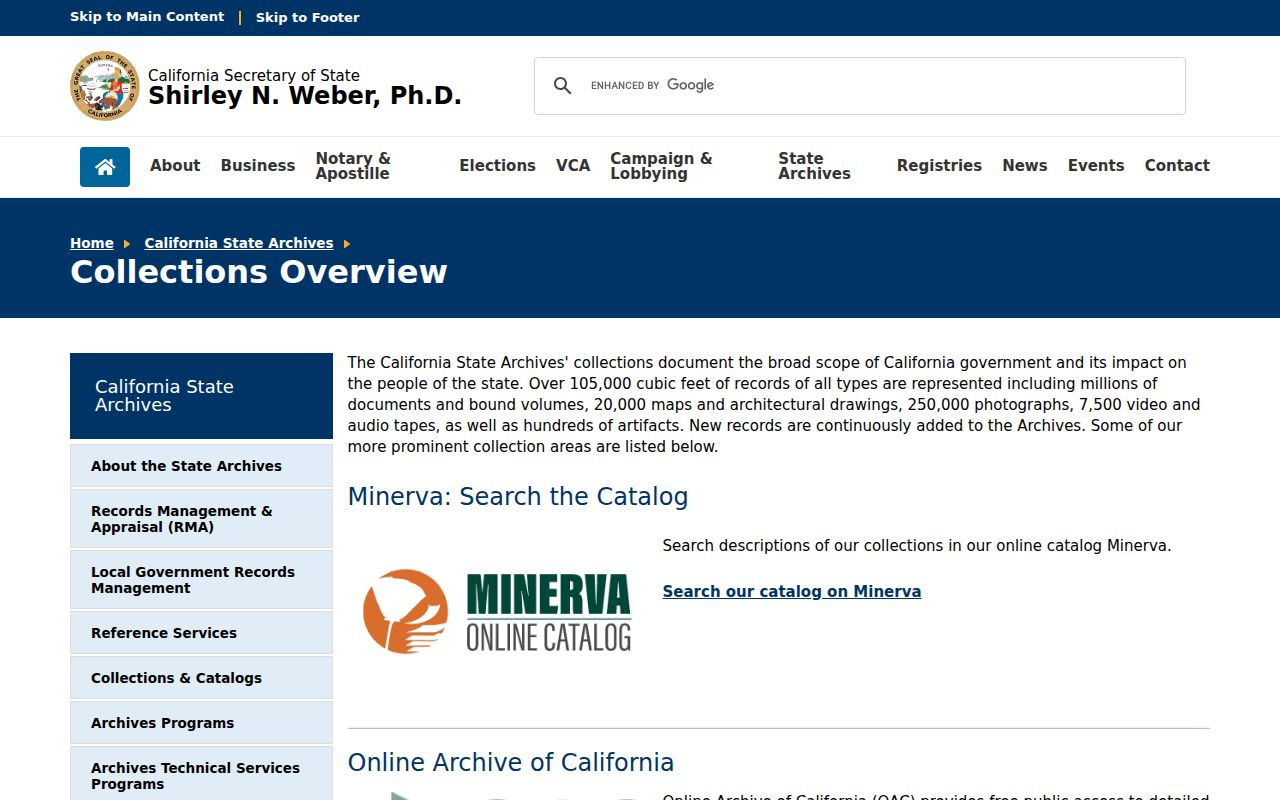
Archive geography matters. A Santa Cruz-city search can miss a Watsonville or Pajaro Valley source, just as a city-only catalog phrase can miss a regional title.
Trace Santa Cruz Families Through Directories
A family-history search works best as a slow sequence, not a single city directory hit. Start with the person and an approximate year. Copy the entry exactly. Check nearby people with the same surname but do not assume kinship. Then move forward one issue at a time, keeping the street and publication gaps beside the name.
- Locate the earliest plausible name entry and record the address, spouse, mark, and trade line.
- Check the address section and nearby numbers for related or adjacent listings.
- Compare the next available volume, noting whether the person moved, changed a name, or vanished from print.
- Pair each directory period with a released census schedule, newspaper item, or probate record.
- Validate ownership in the Recorder and parcel history rather than treating the directory person as the owner.
The final result should say “listed at this address in this year” unless a separate source supports a stronger event. A city directory is a time slice. Its value grows when the exact volume, page, publisher, and companion record are preserved.
The SCPL digital history route below shows how a directory clue can sit beside photographs, maps, and newspaper material without replacing the shelf copy.
When a directory entry needs a modern identity check, move to a case number, APN, FBN number, license number, or another stable key. The Santa Cruz County resident lookup page follows that one-person verification path.