
How Santa Cruz County Residents Surface
A useful Santa Cruz County residents directory search begins with the kind of fact being tested. An APN or street address points to the Assessor and GIS. A person’s name points to the Recorder’s party index, Superior Court case lookup, County Clerk filings, or a historical directory. A known event points to a vital-record application or a probate file. The result is evidence about one record, not a master list of every person at a place.
Ownership, registration, and historical presence are different claims. An assessed owner may receive mail elsewhere. A court party may have lived in another county. A directory subscriber may have shared a home with people omitted from the volume. Start narrow, keep the record number and date, and label each result by what it actually proves.
- Use the Assessor Parcel Lookup or GISWeb to turn an address into an APN and jurisdiction.
- Use the Recorder index for principal parties, deeds, liens, and document numbers.
- Use California My Voter Status only for a personal registration check; the county voter file requires a qualifying purpose and identification.
- Use court, vital, business, license, newspaper, and directory sources for a named event or historical link.
- When the web trail ends, ask the custodian for a focused copy, counter search, mail request, library lookup, or CPRA record request.
Santa Cruz County Records Desk
The offices behind the Santa Cruz County residents directory divide the work. The Assessor identifies parcels and maintains assessment-roll information. The Recorder indexes instruments that transfer or encumber land. Elections controls a confidential voter file. The Superior Court holds public case information, while the County Recorder and CDPH handle different parts of vital-record service. The Clerk of the Board routes county public-record requests when an identifiable record is not already posted.
These offices are close in the Santa Cruz Government Center, but their records do not merge. A deed can prove a transfer. A parcel card can connect an APN to an owner or mailing line. Neither one is a complete household list.
Santa Cruz County Recorder
701 Ocean St., Room 230
Santa Cruz, CA 95060
831-454-2800
Santa Cruz County Elections
701 Ocean St., Room 310
Santa Cruz, CA 95060
831-454-2060
Santa Cruz Recorder's Online Cutoff
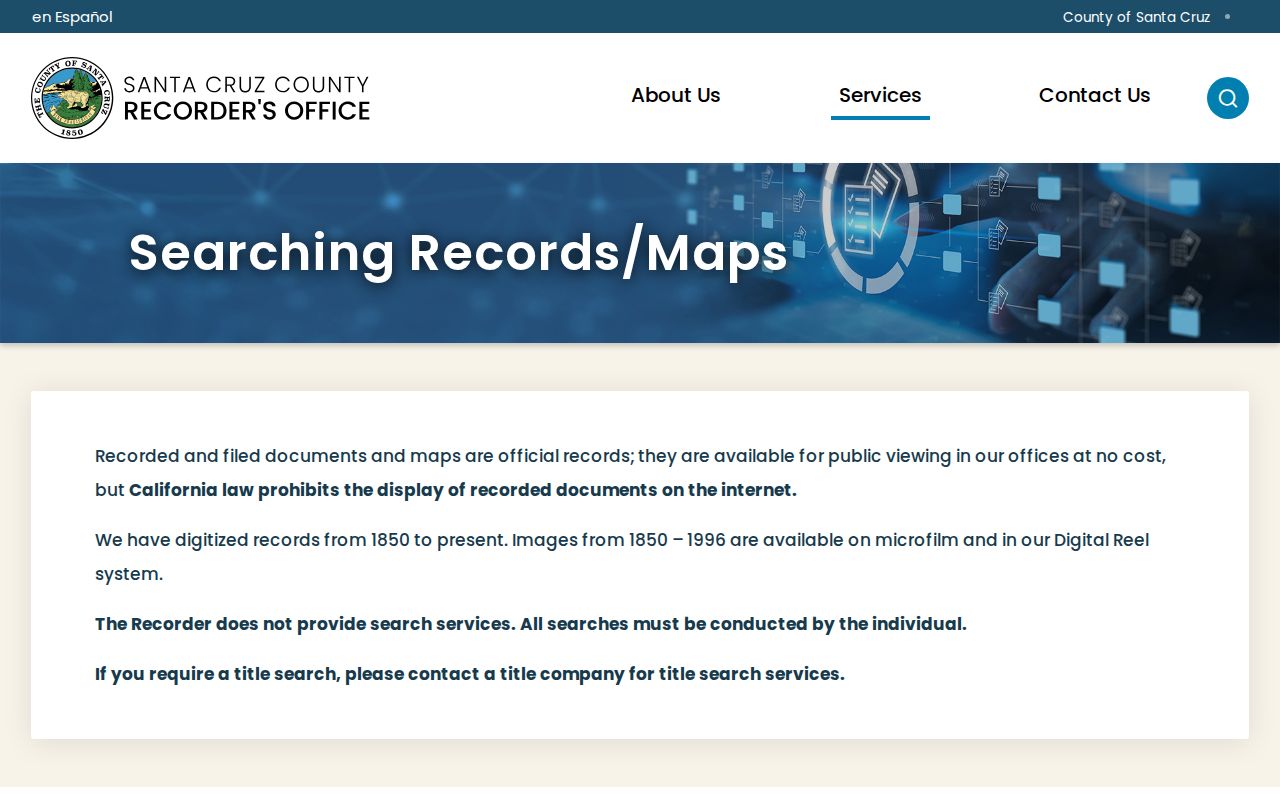
Santa Cruz County’s Recorder supplies one of the clearest local time breaks. The free online Index of Official Records starts in 1978, while the office reports digitized records from 1850 to the present. Images from 1850 through 1996 are available through Digital Reel and microfilm. Documents before 1974 are indexed in handwritten volumes at the Santa Cruz office. A failed web search is therefore a routing problem, not proof that a deed or lien does not exist.
The party-name system has its own quirk. From 1974 through 1990, first words and other terms were abbreviated. After 1990, later terms continued to be shortened. Since 2010, the office has indexed every word as written and provides a party list to help with variants. Search a person, trust, or older institutional party with date bands and spelling forms, then compare the legal description before treating two hits as one chain.
At the counter, public viewing is free. Copy requests need a document number, recording year, at least one party name, and document type. The Recorder lists copies at $1 per page and certification at $3 per document. Filed maps are a separate route: give the map book and page, and expect $5 for the first page and $2 for each added page. Kiosks remain at Room 230 and at 500 Westridge Drive in the South County office.
Online copy purchase requires an account with contact and mailing details. California limits web display of some recorded information, and Government Code section 7928.205 led to the removal of many filed-map links after January 1, 2025. The counter can therefore show more than the open web.
Santa Cruz County Parcel Search
The Assessor and GIS form the address side of a Santa Cruz County residents directory. The County Assessor’s Parcel Lookup accepts an address or APN route. GISWeb places the parcel on a map and helps confirm neighboring polygons, districts, and jurisdiction. The APN is the stable bridge to the Recorder, even when a street label has changed.
Use the fields in the order the record trail needs. A situs address means the physical parcel location. An owner mailing address means where tax or assessment mail goes. The two can differ by county, state, trust, manager, or post-office box. The parcel card may show assessed land and improvement values, property traits, exemptions, and an assessment-roll owner or mailing line where display is permitted. It does not enumerate every household.
| Portal field | What it does in the lookup |
|---|---|
| APN / Parcel Number | Uses the county parcel identifier as the most stable search key. |
| Address | Finds the situs or property address; copy the number and street as shown. |
| Owner name | Availability varies online; verify the current public search policy before relying on it. |
| Search / Submit | Returns a matching parcel or account when a search key is accepted. |
| Reset / New Search | Clears the prior query before another parcel is tested. |
- Roll
- The Assessor’s list of taxable parcels and assessment information.
- Index
- A finding aid with names, dates, types, and record locators, not always the full image.
- Parcel
- A mapped unit of land identified by an APN and tied to a legal description.
- Criss-cross directory
- A reverse directory arranged by address or phone so a place can lead to a listed subscriber.
The County GIS page is a map tool, not a people list. Use it to confirm the parcel and then cross into the Assessor or Recorder record that supports the claim.
The Santa Cruz County GISWeb capture shows the map route used to locate a parcel and inspect nearby shapes. The image is useful for the geography step, not as a substitute for a boundary survey.
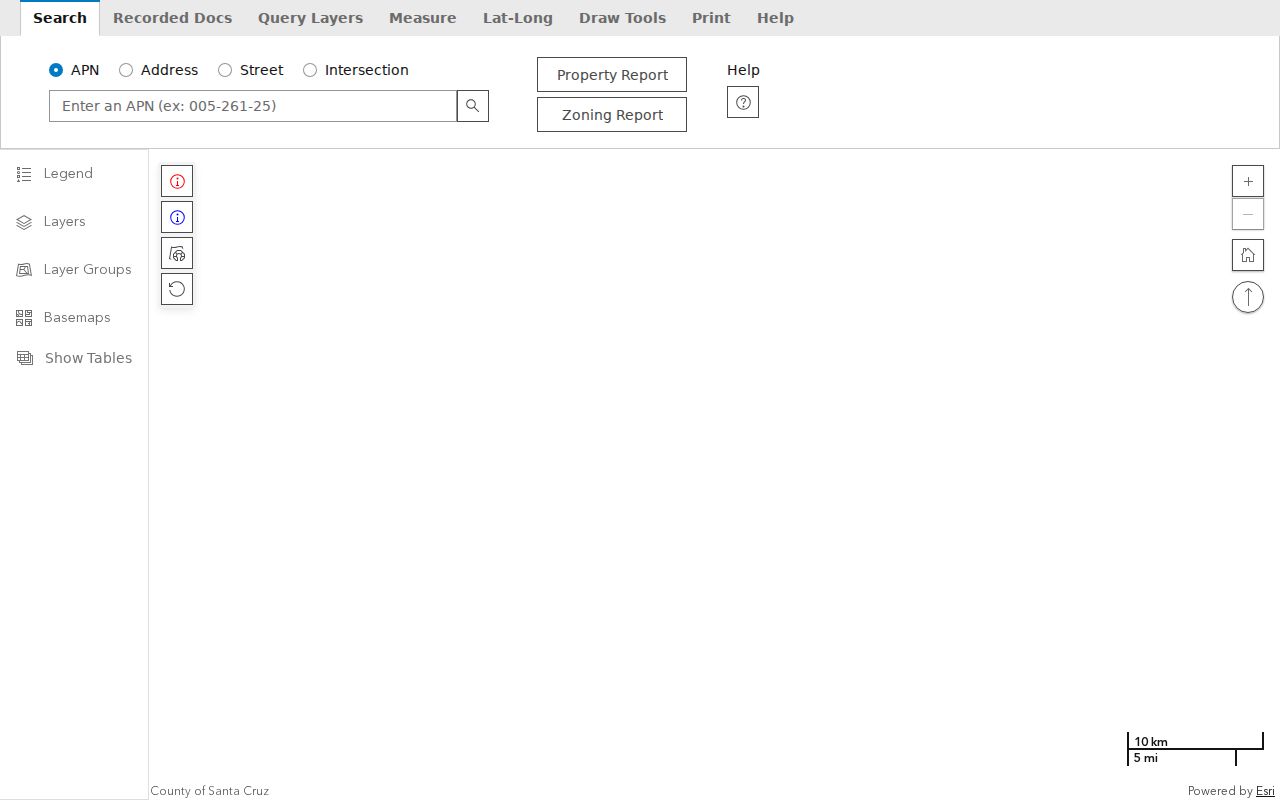
Once the APN is saved, it can anchor an assessor result, a deed chain, a permit question, and a later historical comparison.
Current Santa Cruz County Directories
Current directory-like sources in Santa Cruz County answer different parts of the same question. The strongest match is the one whose field fits the claim. A property record can show an assessed owner. A court result can show a party. A business filing can show an officer or agent. A library collection can show a named person in an earlier year. None should be flattened into a list of everyone who lives at an address.
| Source | People or places shown | Keeper | Access |
|---|---|---|---|
| Parcel lookup | APN, situs, assessed owner and property facts | County Assessor | Free address/APN route |
| Official-record index | Parties to deeds, liens, maps, and related instruments | County Recorder | Free index; copies follow office rules |
| Public case lookup | Parties, case type, filing events, and status where public | Superior Court | Online discovery plus clerk access |
| FBN and business filings | Trade-name registrants, entities, agents, and officers where filed | County Clerk and Secretary of State | Free search; copy rules vary |
| Historical collections | Occupants, subscribers, relatives, and local events by year | SCPL, MAH, UCSC | Library, archive, microfilm, or digital access |
For a current question, keep the source label beside the name: assessed owner, case party, FBN registrant, licensed person, or directory subscriber. A one-person lookup is the better fit when the task shifts from a place to one individual.
Santa Cruz County Court and Vital Trails
A case or certificate is event evidence. Santa Cruz Superior Court’s public case tools can expose a case number, caption, party roles, case type, filing date, hearings, docket events, and disposition to the extent the category is remotely public. The register of actions is not the full file. Family, juvenile, sealed, adoption, protective-order, and identifier details may be withheld or redacted. A precise document request starts with the case number and division.
Vital records use a different gate. The County Recorder issues Santa Cruz County birth, death, and public-marriage certificates. CDPH is the statewide alternative and handles amendment functions. Confidential marriage certificates remain with the issuing county clerk and are available to a spouse or by court order. Informational copies can establish a historical event for research but are marked so they cannot establish identity.
The Santa Cruz County vital-record application image shows the county route for birth, death, and marriage requests. The form is a request for a controlled certificate, not a public name directory.
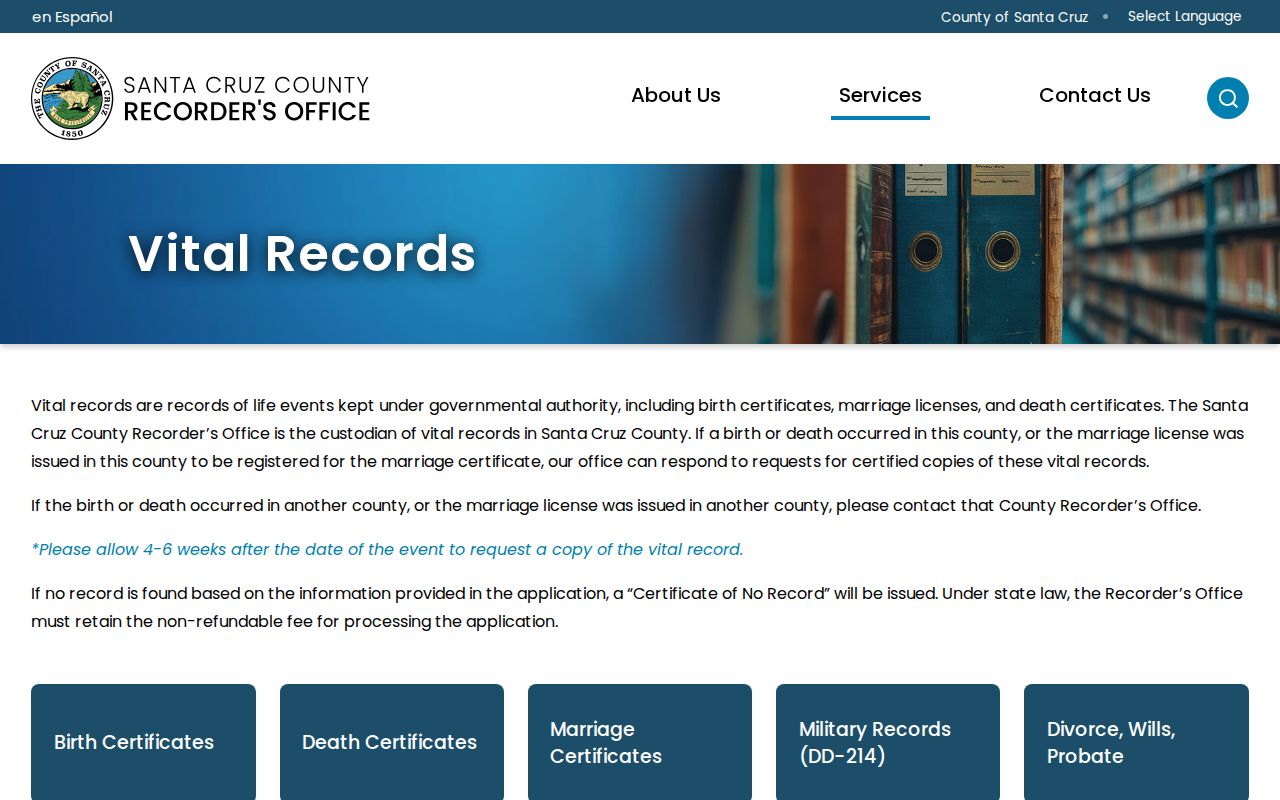
Keep event date, place, record type, and copy category distinct. A historical index hit does not remove the eligibility rules for a certified copy.
| Record clue | Careful statement |
|---|---|
| Probate case | May identify a decedent, petitioner, heirs, and filings when the public file permits access. |
| Death certificate | Confirms a death event subject to copy eligibility; it is not a live residence record. |
| Marriage certificate | Connects parties to a public marriage event; confidential marriages follow stricter access rules. |
| Divorce case | Shows a proceeding and case trail; a CDPH Certificate of Record for 1962 through June 1984 is not the decree. |
Santa Cruz County Voter File Gate
California My Voter Status is a personal self-check. It can confirm one’s registration status, party preference, polling place, vote-by-mail status, or ballot status after the user supplies personal identifying information. It cannot be used to type in a neighbor’s address and retrieve a household. Santa Cruz County Elections treats the voter file as confidential under Elections Code sections 2188 and 2194.
A county file request needs a qualifying election, scholarly, journalistic, political, or governmental purpose, photo identification, certification, and advance payment. The published products include walking lists, printed indexes, and a CD list. Street or alphabetical sorting may be available, but the contents of a ballot remain secret and participation history does not show a vote choice.
The California My Voter Status capture illustrates the personal lookup boundary. It belongs in the Santa Cruz County residents directory only as a self-check or as a reminder that the controlled county file is a separate channel.
Santa Cruz Elections lists Room 310 at 701 Ocean Street, 831-454-2060, and weekday service from 8 a.m. to 5 p.m. Written requests and the current application control the accepted route for identification.
Use the right voter path. A personal status check is not permission to investigate another person. The county file is released only through the statutory purpose, identification, certification, and fee process.
Santa Cruz County Business Affiliations
Business and license records can help separate two people with the same name. The County Clerk’s FBN index is especially useful for a sole proprietor or local trade name. The Secretary of State’s bizfile search returns entity status, formation details, addresses, agent information, and filed officer or manager names where present. Those fields show an organizational connection, not a personal home.
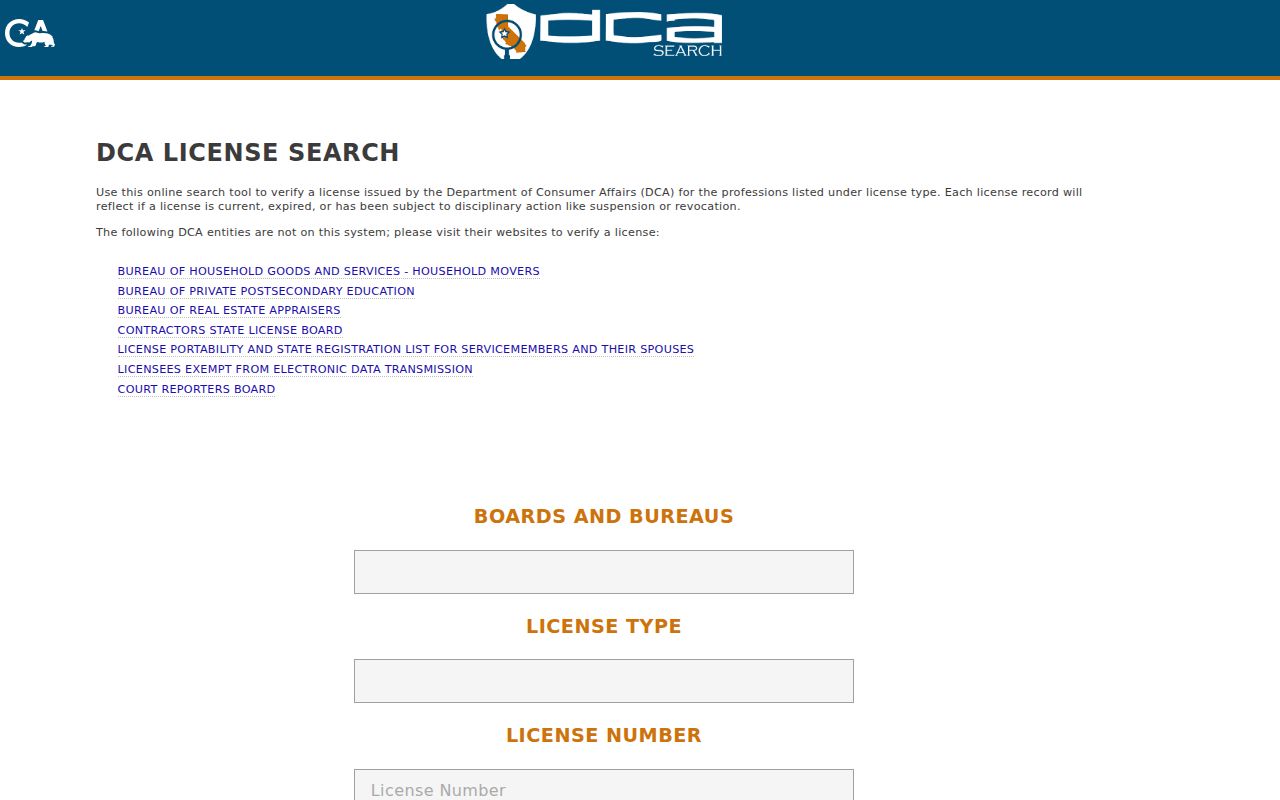
California Department of Consumer Affairs searches add license type, number, status, dates, and discipline links. The State Bar, CSLB, Medical Board, ABC, and other boards may use separate portals. Match a name with a filing date, entity number, professional identifier, or business address before merging it with a county record.
The California business search capture shows the state entity route used for a name or file-number check.
The California license search image shows the board and license fields that can narrow a professional record without claiming where the person lives.
FBN filings can be searched online, at 701 Ocean Street, Room 310, by email, or by mail under the County Clerk’s instructions. A broad result set may stop at the first 160 matches, so a formatted FBN number or a narrow registrant name is the better key.
Old Santa Cruz County Address Trails
An old address becomes more useful when it is converted to an APN, legal description, and jurisdiction. The current parcel can lead to a later deed. The seller in that deed can become the next grantee search. Historical directories, census schedules, newspapers, permits, and maps then supply people evidence between ownership transfers.
Santa Cruz County’s mailing geography creates a real trap. A Santa Cruz mailing line can describe the City of Santa Cruz or unincorporated territory. Watsonville postal addresses reach into the Pajaro Valley. ZIP 95033 can say Los Gatos while the parcel lies in northern Santa Cruz County. Use GIS before choosing a city permit or planning custodian.
Property ownership is not a household roll. A multi-unit parcel can have one assessed owner and many households. A mailing address can point to an owner elsewhere. A criss-cross listing may name a subscriber for one year while omitting other people. For a current address chain, the Santa Cruz County street directory keeps those parcel records in one workflow.
California Requests for Santa Cruz Records
The California Public Records Act, now Government Code sections 7920.000 through 7931.000, is the fallback for an identifiable, non-exempt record held by a local or state agency. A request need not use magic words or explain a purpose, but it should name the office, subject, place, date range, and format. CPRA asks an agency to locate existing records. It does not make the agency create a residents directory or answer an open research question.
Under section 7922.535, the usual determination window is 10 days, with a written extension of up to 14 days for defined unusual circumstances. Inspection is generally free. Copy charges are limited to direct duplication cost unless another statute sets a fee. Redactions, privacy rules, juvenile files, protected addresses, and law-enforcement exemptions can narrow the release.
The Santa Cruz County public-record request route is the correct starting point when a known county record is not already online. Describe the record rather than asking an office to find “everyone” at an address.
A good request leaves a short trail: the custodian, date sent, exact record description, response date, withheld section, and copy format. If the source is a deed, court file, vital certificate, or voter record with its own access rules, use that record’s dedicated procedure first.
Historical Santa Cruz County Directories
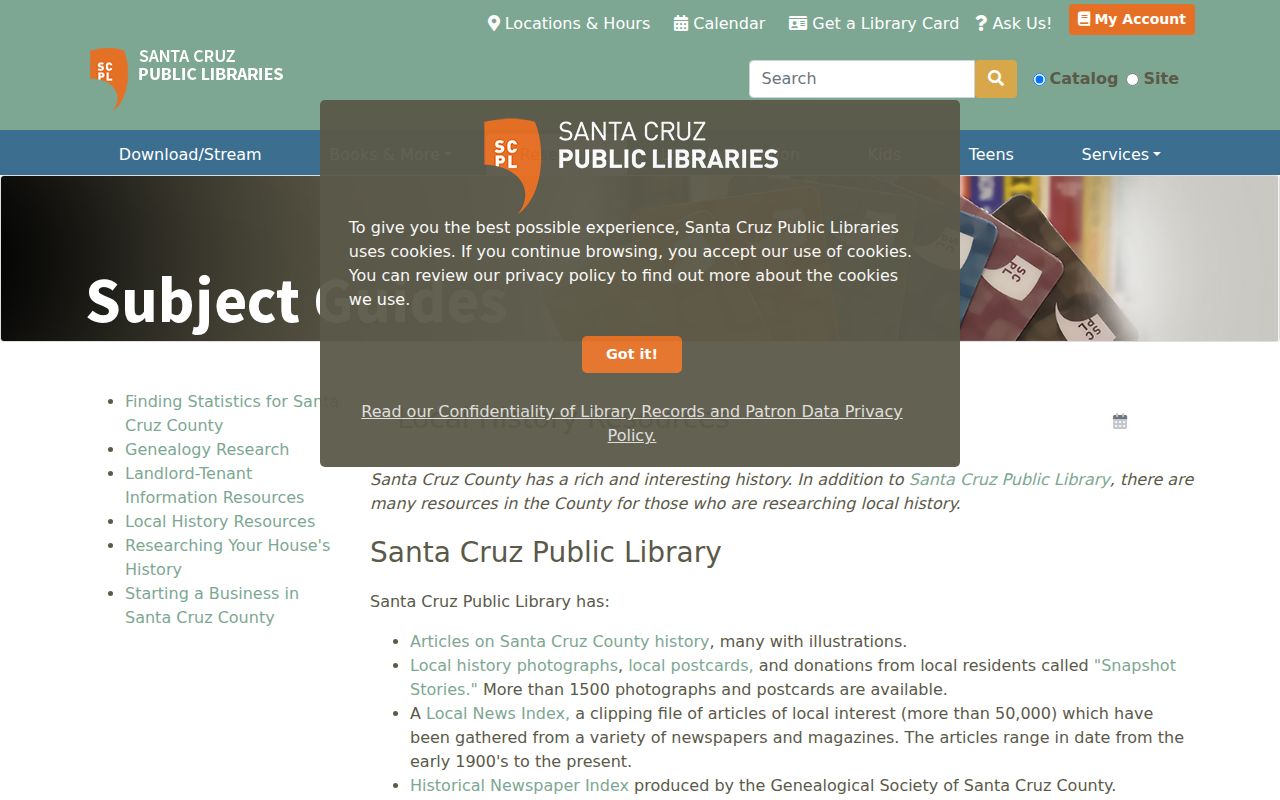
Santa Cruz Public Libraries hold most Polk Santa Cruz directories from 1910 through 1988 and some Haines criss-cross volumes from 1977 through 2015. Earlier shelves include a 1902 Santa Cruz City Directory, McKenney’s 1879 District Directory, Coast County Directory volumes from 1884 to 1885, regional San Jose titles, and business directories from the 1870s and 1880s. The Santa Cruz Museum of Art & History and UCSC add overlapping print, manuscript, map, and photographic material.
The SCPL local-history resources capture shows the library route through directories, newspapers, cemetery material, yearbooks, and archives.
Alphabetical volumes help start with a person. A street section or Haines reverse volume can start with an address. Each entry is selective: occupations, spouses, boarders, subscribers, and rural households may be recorded unevenly.
The Recorder search capture pairs well with the historical shelf because ownership and occupancy are separate questions.
For a full reading method, use the Santa Cruz County Directory Book. The home-level rule is simple: copy a name and address exactly, save the publication year, and verify the claim with a second source.
Santa Cruz County Family Research Paths
Some of the best resident searches are human ones. A probate file can help locate heirs. A yearbook or campus archive can reconnect classmates. Official adoption services are the lawful route for confidential adoption questions. A newspaper obituary can supply a date, relative, or former address that then guides a recorder, court, or library search.
Santa Cruz Public Libraries, UCSC Special Collections, the Museum of Art & History, and Pajaro Valley Historical Association serve different parts of the county. Watsonville and Pajaro Valley material matters when a north-county search misses a family, farm, school, or local paper. Search compound names, accents, initials, married names, and period place labels without guessing a person’s identity from a surname.
Unclaimed-property records can offer a name and reported-address lead. The state’s result is not proof of a current home, and a claim requires identity and entitlement evidence. Likewise, a professional license or business filing is an affiliation trail, not a residence certificate.
When Santa Cruz County Web Searches Stop
Online tools are finding aids. The counter, mail, phone, library, archive, and request channel still matter. The Recorder has counter indexes, kiosks, Digital Reel, microfilm, mail copy requests, and map requests. The court has public terminals and division clerks. The vital-record offices take in-person and mail applications. SCPL supplies print, microfilm, staff help, and local-history collections.
Compare the official route with a commercial compilation before accepting a lead. A custodian record has a defined keeper, record number, event date, and access rule. A commercial result may merge names, lose context, or lag behind a correction. Use the category only as a lead, then return to the office that created the record.
| Route | Strongest use | Main caution |
|---|---|---|
| Official county or state record | Verify a defined event, parcel, filing, or case | Access limits, fees, redactions, and coverage gaps apply |
| Library or archive collection | Place a person or household in a past year | Publication bias and missing years can distort absence |
| Commercial compilation | Generate a possible spelling or source lead | Stale, merged, incomplete, and not a custodian record |
Lawful personal use. Public records support family history, civic research, title questions, and personal safety. Do not use a Santa Cruz County record to stalk, harass, threaten, or repeatedly contact a person who has asked for no contact.
Santa Cruz County Record Geography
Santa Cruz County was organized in 1850 and briefly carried the Branciforte name, so both terms belong in an older catalog search. Record geography later spread across Santa Cruz, Watsonville, Capitola, Scotts Valley, and large unincorporated areas. A postal community, census place, city limit, and county jurisdiction can all differ.
The local history is part of the search method. Mission and church records, Mexican land-grant papers, county books after statehood, directories, newspapers, maps, and census schedules use different naming habits. Older directories may list a woman through a spouse, omit a rural worker, or show a subscriber rather than every person in a home.
Recent initiatives add another date marker. Santa Cruz County launched free Fraud Notify in October 2025, and California’s DROP platform began a one-request data-broker deletion process in 2026. Neither changes the status of a government record. Both make it more important to distinguish monitoring, privacy action, and verification.